AI Mental Health Application Mobile UI K: A Designer's Toolkit
There's a unique challenge in designing for mental health. It's not about flashy sales or urgent calls to action. It's about trust, calm, and clarity. When I first came across the AI Mental Health Application Mobile UI K, I was skeptical—another UI kit promising the moon. But this one felt different. It wasn't just a collection of screens; it was a thoughtful system built with empathy at its core. For anyone building a wellness app, a meditation platform, or even a personal journaling tool, this template offers a foundation that respects both the user's emotional state and the designer's need for efficiency.
Why This UI Kit Stands Out in a Crowded Market
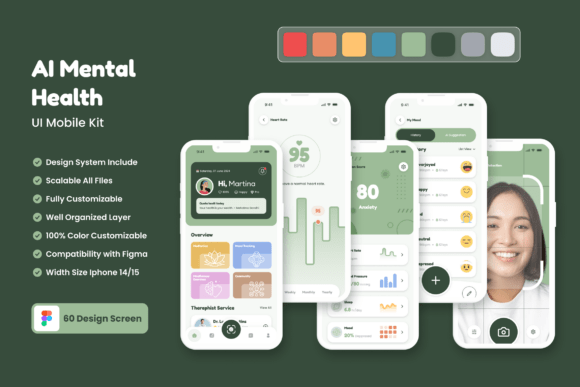
Most generic mobile UI kits are built for e-commerce or social media. They're all sharp edges, bold colors, and aggressive buttons. The AI Mental Health Application Mobile UI K understands that a mental wellness app needs to breathe. The 50 pixel-perfect screen designs are crafted with soft gradients, ample white space, and intuitive navigation that feels less like software and more like a gentle guide. The 80+ UI elements aren't just functional; they're designed to reduce cognitive load. Think of calming progress indicators, non-intrusive notification badges, and typography that prioritizes readability over flair. This isn't just a design asset; it's a philosophy of care translated into pixels.
Practical Applications Beyond the Obvious
While the name suggests a specific niche, the versatility of this kit might surprise you. Yes, it's perfect for building a therapy app or a mindfulness platform. But consider these broader applications:
- Brand Identity for Wellness Professionals: Therapists, life coaches, and yoga instructors can use the kit's visual language to create cohesive client-facing materials. The calm color palettes and clean layouts can inspire a full brand identity, from business cards to workshop handouts.
- Packaging for Health Products: Imagine packaging for herbal teas, aromatherapy oils, or supplement bottles. The kit's aesthetic—soft, trustworthy, and modern—can inform packaging design that communicates purity and care.
- Editorial Design for Blogs and Magazines: The typography hierarchy and spacing within the screens provide a masterclass in editorial layout. Use these principles for a wellness blog or a digital magazine to enhance readability and visual flow.
- Social Media Graphics for Coaches: Create Instagram carousels, Facebook posts, or Pinterest graphics that feel consistent with a calming brand. The template's icon set and color styles make it easy to produce on-brand content quickly.
Building Visual Consistency and Professional Trust
One of the biggest hurdles for small business owners and creators is achieving visual consistency. A mismatched logo, website, and social feed can undermine credibility. This UI kit acts as a single source of truth. Because it's built with 100% scalable vectors and symbol objects in Figma, you can ensure that every button, card, and icon across your mobile app, website, and marketing materials shares the same DNA. This level of cohesion builds brand recognition. When a user sees your calming blue-green gradient on a Facebook ad and then encounters the same palette and rounded corners in your app, trust deepens. It signals professionalism and attention to detail—qualities paramount in the mental health space.
How to Customize It Without Losing the Magic
The beauty of the AI Mental Health Application Mobile UI K is its full editability. But customization requires a thoughtful approach. Here’s some practical advice:
- Start with Color Psychology: The kit likely uses a serene palette. Before you change colors, research what emotions different hues evoke. A vibrant orange might energize, but it could also induce anxiety if overused. Adjust the color styles globally in Figma to maintain harmony.
- Typography is Your Voice: The kit includes free fonts, but consider if they match your brand's voice. Is your app for young adults? A modern sans-serif might work. For a more reflective journal, a gentle serif could add warmth. Always prioritize readability—test font sizes and line heights on actual devices.
- Simplify, Don't Overload: With 80+ elements, the temptation is to use them all. Resist. A mental health app should feel uncluttered. Remove elements that don't serve a core function. Use whitespace as an active design element to create breathing room.
- Test Your Pairings: If you introduce a new font for headings, pair it carefully with the body text. Contrast is good, but clash is bad. Tools like Fontjoy can help you find balanced pairings that maintain the kit's calm aesthetic.
Licensing and Final Considerations for Commercial Projects
Before you launch your creation, a crucial step is reviewing the licensing. The kit specifies that preview images are not included, but you must verify the commercial license for the fonts and icons. Typically, assets like these are cleared for use in end products like apps and websites, but redistribution of the raw kit files is prohibited. This is standard for premium design assets, protecting both the creator and you. Always read the license agreement—it's a small step that prevents big headaches later.
Ultimately, the AI Mental Health Application Mobile UI K is more than a shortcut. It's a catalyst. It provides a professionally designed, emotionally intelligent starting point that allows you to focus on what truly matters: creating a product that genuinely helps people. Whether you're a developer coding your first app, a designer freelancing for a wellness startup, or an entrepreneur bringing a healing tool to market, this template saves you weeks of groundwork. It hands you a visual language built on empathy, so you can spend your energy on the content, the therapy, the connection—the parts only you can create.